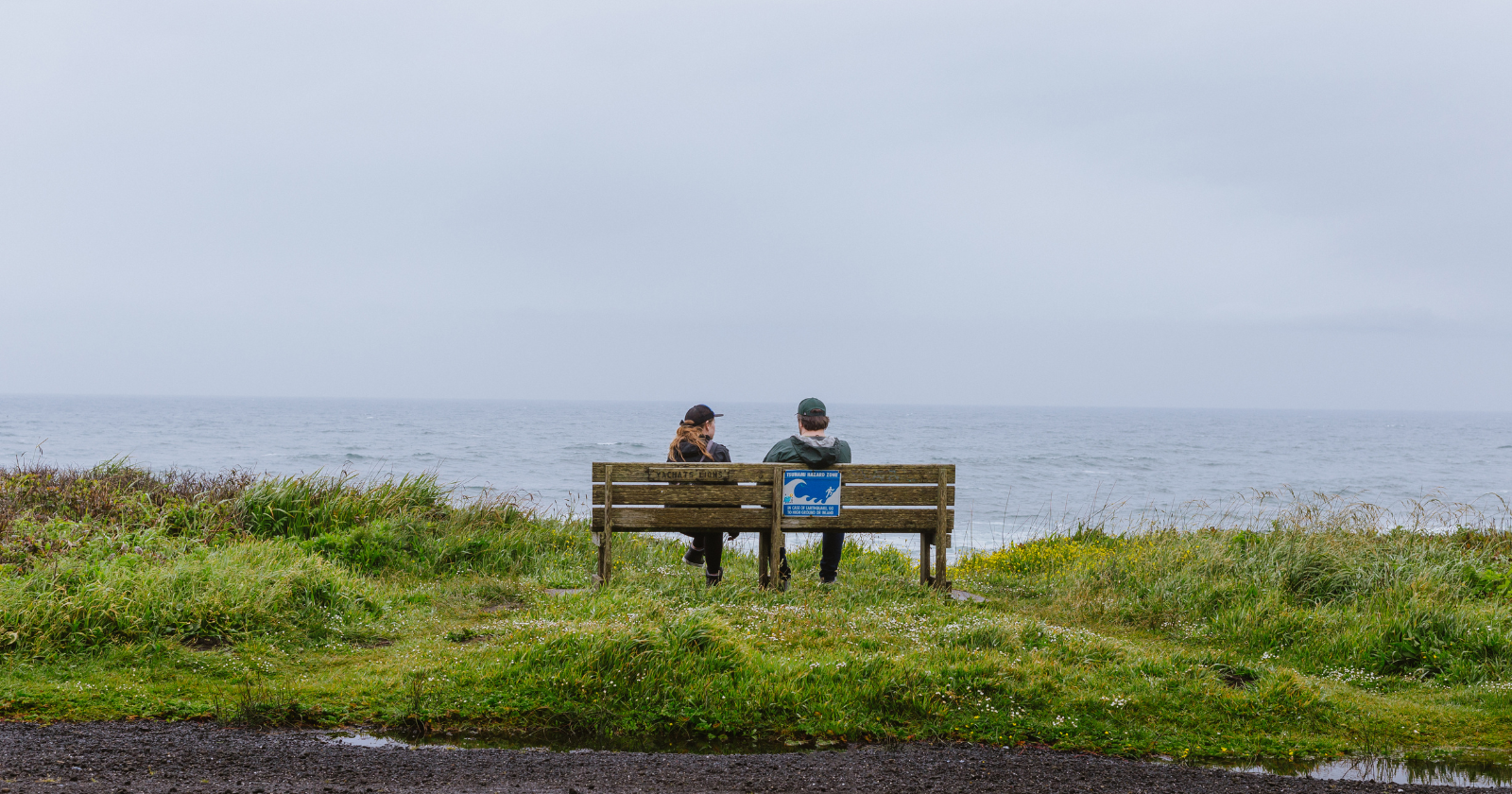
It was Monday evening, and I was on a mission.
Not an interesting mission. Not a cinematic one. Just the kind of mission I create for myself almost every day: get my steps done.
Walking has become one of the few habits I rarely question. Partly because it is good for my body, but mostly because it helps me clear my head. From work. From conversations I replay too many times. From emotions that gather during the day and somehow feel louder by evening. From the strange mental noise that comes from being both tired and too alert to rest.
Walking helps.
What helps even more is the small ritual I have built around Tom Rosenthal’s Strangers on a Bench, a podcast where ordinary strangers somehow end up saying the exact thing you did not know you needed to hear.
That Monday, my favorite day of the week, I was listening to a newly released episode called “Charge It To The Game,” while trying to complete my steps and return to myself at the same time.
Then a stranger on a bench said a sentence I have not been able to stop thinking about:
“Planning is a distraction from living.”
I remember laughing in the middle of the park just because it felt personally rude.
I do not remember the last time I did not plan.
Even not planning has become part of my plan
I plan work. I plan writing. I plan research. I plan rest. I plan when to answer messages. I plan who to answer, who to filter, which conversation deserves my energy now and which one should wait until I feel more emotionally available.
I plan walks. I plan meals. I plan when to clean my room, when to clear my head, when to catch up with people, when to disappear for a bit. I plan how to become less overwhelmed by the plans I already made.
At some point, even not planning became part of the plan.
I will think, “Maybe on Sunday I will be spontaneous.”
Which is a sentence so ridiculous it almost deserves its own diagnosis.
My to-do list has become so packed that I have seriously considered adding “clean to-do list” to the to-do list. That sounds like a joke, but it also feels like a very accurate summary of my inner life.
There is the list itself. Then the list about the list. Then the guilt about the list. Then the plan for becoming the kind of person who has a healthier relationship with lists.
So when I heard “planning is a distraction from living,” it did not land like a cute podcast quote.
It landed like an accusation.
Because maybe planning is not always the responsible thing I tell myself it is. Maybe sometimes it is a very clever way to avoid the terrifying, unmanageable, unscheduled experience of actually being alive.
Planning makes me feel safe
I understand why I do it.
Planning turns the vague into the manageable. It gives anxiety a shape. It takes emotional overload and translates it into tasks, reminders, folders, deadlines, drafts, notes, calendars, and tiny systems that make me feel less at the mercy of the day.
When life feels too open, a plan feels like a railing.
Hold this. Start here. Finish there. Do this first. Then this. Then this.
There is comfort in that.
There is also danger.
Because a railing is not the same as a life.
At some point, I think I started confusing being prepared with being present. If I could map the day, maybe I would not have to feel the day so much. If I could organize the future, maybe I would not have to sit with the discomfort of not knowing what would happen next.
Planning can look mature from the outside. It can look responsible, ambitious, disciplined, reliable. And often, it is. Deadlines exist. Work exists. People depend on us. Not every plan is avoidance.
But sometimes planning becomes a socially approved way to stay one step away from life.
You are always preparing for the next thing. Improving the next version. Solving the next problem. Optimizing the next season. Waiting for the better week, the calmer month, the cleaner emotional state.
And then one day you realize you are not really living the day you are in.
You are managing it.
A small glitch revealed how much I rely on control
A few days ago, I updated my MacOS to the latest version.
This is not a dramatic sentence. It should have remained a boring event.
But for a few minutes, my Notes app did not fetch everything from iCloud. The notes were not gone. My life was not ruined. They were simply taking a moment to come back.
Still, my body reacted as if something serious had happened.
I am exaggerating when I say I almost had a panic attack, but only slightly in spirit. The feeling was immediate: wait, where are my notes? Where is everything? What if I lost the things I needed? What if the structure disappears?
And that was the revealing part.
It was not really about Notes.
It was about the fact that my notes are not just notes. They are my external nervous system. Or my external hard drive, if you like. They hold the things my brain no longer trusts itself to carry alone: article ideas, research thoughts, half-written sentences, reminders, emotional fragments, future plans, old plans, deadlines, and probably several separate plans for organizing the plans.
When they disappeared for a few minutes, I felt exposed.
As if without the structure, I did not know where I was.
I think I plan because part of me believes that if I can keep enough things held together, life will not surprise me too harshly.
But life does not work that way.
Life does not wait until the plan is ready
Life keeps happening while I am arranging the conditions under which I will finally allow myself to participate in it.
It happens while I am deciding which task is most urgent. It happens while I am trying to become less anxious, more focused, more organized, more prepared, more ready.
It happens while I am waiting for the perfect emotional state in which to begin.
That may be why the sentence bothered me so much.
“Planning is a distraction from living.”
I do not think it is always true. But I think it is true often enough to be dangerous.
Because planning can feel like action while keeping you emotionally stationary. You are doing something, but you are not necessarily experiencing anything. You are preparing, but you are not necessarily participating.
And I have to admit: there is a version of me somewhere that is always almost about to live.
Almost ready to rest. Almost ready to write the thing I really care about. Almost ready to enjoy the walk without measuring it. Almost ready to stop replaying conversations. Almost ready to trust that if something is not written down, I may still survive.
Almost.
But ‘almost living’ is not the same as living.
Maybe this is why I do not feel fully alive sometimes
This is the sentence I do not like admitting.
Maybe the reason I sometimes do not feel fully alive is not that I am doing too little.
Maybe it is that I am trying to turn life into something I can control before I allow myself to enter it.
I’ve felt a specific kind of numbness that comes from over-organization. It does not look like despair. It looks like competence.
You answer emails. You meet deadlines. You keep track of tasks. You write. You study. You move through the day. You are technically functioning.
But functioning is not always the same as being alive.
Living asks for contact.
With the day. With people. With chance. With the conversation you did not schedule. With the walk that becomes longer than planned. With the stranger who finds you on a bench just to ask your favorite day of the week, and somehow ends up reminding you that your life is not waiting inside your calendar.
Planning can protect us from chaos. But it can also protect us from contact.
And if you protect yourself from contact for long enough, life starts to feel like something happening near you instead of through you.
The Sovereign Mind asks: Is this plan helping me live or helping me avoid life?
There is a framework I keep returning to at Ideapod for a reason. I called it ‘The Sovereign Mind‘. At its core, it is about what it takes to think clearly and live with some degree of autonomy in a world constantly trying to make us reactive. And when I look at my own compulsive planning through that lens, it stops looking like a harmless personality trait.
It starts looking like a script.
- Unlearning: The inherited script is that planning equals responsibility. That a well-organized life is a well-lived one. That if you have enough systems, notes, routines, reminders, and backups, you are somehow closer to being safe. This script is everywhere: in productivity culture, in the way ambition gets performed online, and in the quiet social approval we give to people who seem to “have it together.”
- Restoration: What gets lost through over-planning is not efficiency. It is presence. The ability to make contact with the day as it is actually happening. To take a walk without turning it into a metric. To rest without treating it as recovery work. To have a conversation without immediately analyzing what it means. Restoration, for me, is not about becoming anti-planning. It’s to notice when the structure stops supporting life and starts replacing it.
- Defense: Productivity culture is not neutral. It often profits from the anxiety it claims to solve. It sells us tools to manage time, but many of those tools end up managing our attention instead. They keep us organizing, optimizing, preparing, improving — always almost ready, but rarely fully here. Recognizing that loop is not laziness. It is protection. It is a way of saying: I do not want my life to become a project I am endlessly preparing to begin.
“Life lifed” is not giving up
There was another phrase from the episode that felt a little too perfectly designed to embarrass the part of me that thinks life can be managed into obedience:
“Life lifed.”
At first, it sounds almost too simple. Maybe even funny.
But the more I think about it, the more I like it.
It does not sound passive to me. It does not sound like defeat. It sounds like someone who has stopped pretending that every part of life can be predicted, prevented, explained, controlled, or made fair.
Life lifed.
Things happened. Some were beautiful. Some were painful. Some choices made sense only later. Some never made sense at all. Some plans failed because they were bad plans. Others failed because life does not sign contracts with our calendars.
There is a strange freedom in that.
Not because it removes responsibility, but because it removes the fantasy of total responsibility.
Maybe we are not meant to carry the entire future in advance. Maybe some things can only be known by entering them. Or, at least, I choose to believe that’s the way it works.
The question is what the plan is protecting me from
I am not about to throw away my calendar and become a mystical person who follows the wind.
That’s simply not possible.
I still need plans. I still like lists. I still have work, deadlines, responsibilities, and a brain that feels calmer when things have structure.
The point is not to become anti-planning.
The point is to stop using planning as a substitute for aliveness.
I want to know the difference between a plan that supports life and a plan that delays it.
A good plan should create room. It should help me show up. It should protect what matters. It should make contact with life easier.
A bad plan becomes the thing I serve. It takes my attention, then my spontaneity, then my trust in myself. Eventually, even rest has to submit a formal request.
So the question never was “Should I plan?” The better question is: what is this plan protecting me from?
Is it protecting me from forgetting something important? Or is it protecting me from uncertainty?
Is it helping me live better? Or is it helping me avoid the vulnerability of living?
Is it giving my day shape and form? Or is it turning my life into a project I am never ready to begin?
That is what the stranger’s line disturbed in me.
Because somewhere under the lists, notes, backups, calendars, drafts, reminders, and plans for becoming less dependent on plans, there is a simpler thing I keep postponing.
Life.
Not the idea of it.
Not the improved version of it.
Not the version I will finally deserve after everything is organized.
Just the one already happening.
Life lifing.
And me, hopefully, learning to arrive before it is over.