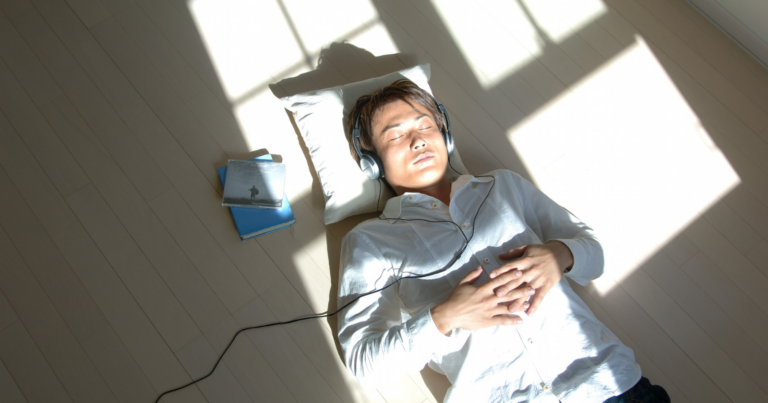
A few months ago, I spent a long weekend entirely alone. No plans, no socializing, no real agenda. Just me, my cat, a stack of books, and long walks along the coast.
By Sunday evening, I’d written more in my notebook than I had in the previous three weeks combined. Not because I forced myself to. But because something in my brain seemed to loosen up once the noise stopped.
I mentioned this to a friend, and she looked at me like I’d described a punishment. “A whole weekend alone? Weren’t you bored?”
I wasn’t. And that reaction stuck with me, because it points to something worth examining. We live in a culture that treats solitude with suspicion. If you’re spending a lot of time alone, something must be wrong. You must be lonely, antisocial, or avoiding life.
But when you look at the people who’ve produced genuinely original work, whether in science, writing, philosophy, or art, a different pattern emerges. They don’t just tolerate solitude. They seek it out. Deliberately and repeatedly.
The question is why. And the answer goes deeper than “introverts like quiet.”
What the research actually shows
One of the more interesting studies on this topic comes from psychologist Julie Bowker at the University at Buffalo. Her research, published in the journal Personality and Individual Differences, distinguishes between three types of social withdrawal: shyness (withdrawing out of fear), avoidance (withdrawing out of dislike), and unsociability (withdrawing out of a genuine preference for solitude).
The finding that caught my attention was this: unsociability, the non-fearful kind of withdrawal, was positively linked to creativity. Not just unrelated to negative outcomes. Actually connected to a positive one.
As Bowker put it, motivation matters. We have to understand why someone is withdrawing to understand the associated risks and benefits.
That distinction is important, because it challenges the blanket assumption that spending time alone is a problem to solve. For some people, it is. For others, it’s where their best thinking happens.
The brain network that only activates when you’re not busy
There’s a neurological reason why solitude and original thinking tend to go together, and it has to do with something called the default mode network.
The default mode network (DMN) is a set of brain regions that becomes active when you’re not focused on an external task. When you’re daydreaming, reflecting, letting your mind wander without direction, the DMN lights up.
And here’s the thing. This isn’t idle brain activity. Research in cognitive neuroscience has shown that DMN activity is closely associated with creative insight, autobiographical memory, future simulation, and the ability to make novel connections between seemingly unrelated ideas.
When you’re constantly engaged with external input, whether that’s conversation, notifications, meetings, or a social media feed, the DMN doesn’t get much room to operate. It’s suppressed by the brain’s task-positive networks, which handle focused, outward-directed attention.
Solitude creates the conditions for the DMN to do its work. And that work, the quiet linking of ideas beneath conscious awareness, is where much of original thinking actually comes from.
It’s why so many people report having their best ideas in the shower, on a walk, or while staring out a window. Those aren’t wasted moments. They’re moments when the brain’s creative infrastructure finally has space.
Why groups tend to flatten thinking
This isn’t an argument against collaboration. Some problems genuinely require multiple perspectives.
But there’s a well-documented cost to group thinking that rarely gets talked about in a culture that glorifies teamwork and brainstorming.
Social environments introduce conformity pressure. Even in groups that value originality, the mere presence of other people shifts your thinking toward consensus. You start unconsciously editing your ideas before you voice them, filtering for what will land well, what will be understood, what won’t make you look strange.
This isn’t a character flaw. It’s a deeply wired social instinct. Humans evolved to maintain group cohesion, and one of the ways we do that is by aligning our thinking with the people around us.
The problem is that original ideas, by definition, don’t align with what everyone else is already thinking. They often feel strange, half-formed, or counterintuitive in their early stages. They need space to develop before they can survive contact with other people’s opinions.
Research by Runa Korde and Paul Paulus found that people who alternated between solitary and group brainstorming generated more new ideas than those who only brainstormed alone or only brainstormed with a group. The takeaway wasn’t that one mode is better than the other. It was that the solitary phase is essential and most people skip it.
What most people get wrong about solitude
The biggest misconception is that solitude and loneliness are the same thing.
They’re not. Loneliness is an unwanted state of disconnection. Solitude is a chosen state of reduced external input. One feels like deprivation. The other can feel like relief.
The second misconception is that people who seek solitude are avoiding life. Sometimes that’s true. But more often, the people I’ve met who are most deliberate about their alone time are also deeply engaged with the world. They just process that engagement differently. They need time to absorb, integrate, and form their own response before they re-enter the conversation.
I notice this in my own work. When I write immediately after a social situation or a day packed with inputs, what comes out tends to be reactive and surface-level. When I give myself a buffer of quiet first, the writing gets sharper. Not because I’m smarter alone, but because my thinking has had time to settle.
The third misconception is that productive solitude looks like intense focus. Sometimes it does. But often it looks like nothing. Staring out the window. Walking without a destination. Sitting with a cup of tea and no agenda. The default mode network doesn’t care if you look productive. It cares that your attention isn’t being demanded by something external.
The social cost of thinking differently
Here’s something that doesn’t get acknowledged often enough: spending more time alone than the people around you expect comes with friction.
People notice. They comment. “You’re always doing your own thing.” “We never see you.” “Are you okay?”
And even when those comments come from a place of genuine care, they carry an implicit message: the way you’re living looks unusual, and unusual is cause for concern.
For original thinkers, this creates a tension that doesn’t fully resolve. They need solitude to do their best work, but the social environment they live in often treats that need as a deficiency.
I’ve felt this tension myself, especially after moving abroad. My social life looks different from what it was back home. I spend more time alone, more time walking, more time reading without purpose. From the outside, it might look like I’m isolating myself. From the inside, it feels like I’m finally giving my mind the kind of input it actually needs.
That gap between how solitude looks from the outside and how it feels from the inside is something most original thinkers learn to live with. It doesn’t always feel comfortable, but it’s a cost they’ve decided is worth paying.
The attention economy makes this harder than ever
Even if you intellectually understand the value of solitude, the modern environment is working against you.
Every app, platform, and notification system is designed to fill your quiet moments with input. The second you have a gap, something buzzes, pings, or auto-plays. Boredom has been almost entirely engineered away, which sounds like progress until you realize that boredom is one of the brain’s most powerful creative triggers.
When you’re bored, your default mode network activates. Your mind starts to wander. You make connections you wouldn’t make under focused attention.
But if every idle moment is immediately filled by a scroll, that process never gets started. You stay in reactive mode, responding to external stimuli instead of generating internal thought.
This is one of the reasons original thinking feels rarer than it should, given how much information we have access to. Information isn’t the bottleneck. Processing time is. And processing time requires exactly the thing the attention economy is designed to eliminate: unstimulated quiet.
Solitude isn’t the whole picture
I want to be careful not to romanticize this.
Spending time alone doesn’t automatically make you a more original thinker. You can sit in silence for hours and produce nothing of value. You can also use solitude as an avoidance strategy, retreating from the world not because you need space to think, but because engaging feels too hard.
The distinction matters. Productive solitude tends to be intentional, not reactive. It’s chosen, not escaped into. And crucially, it exists alongside social engagement, not as a replacement for it.
The people who produce the most original work tend to follow a rhythm. They withdraw to think, and they re-enter to test, share, and refine. They don’t live entirely in isolation. But they protect their alone time fiercely, because they know from experience what happens when they don’t.
Sovereign Mind lens
At Ideapod, we use a framework called The Sovereign Mind to think about cognitive clarity, agency, and protecting your thinking from external capture. This topic sits at the heart of it.
- Unlearning: The default script says that spending significant time alone is a problem, that it signals loneliness, social failure, or avoidance. Unlearning means recognizing that this assumption confuses social performance with wellbeing, and that some of your most valuable cognitive work requires the absence of social input, not the presence of it.
- Restoration: Original thinking depends on the default mode network, and the DMN needs unstimulated time to function. Restoration here means treating solitude not as a luxury but as a cognitive necessity, a deliberate practice that rebuilds the attentional and creative capacities eroded by constant input.
- Defense: The pressure to always be available, always connected, always “on” is partly social and partly engineered by platforms designed to fill every quiet moment. Defense means actively protecting your solitude from both the social expectation that you should be more visible and the technological systems designed to keep you engaged.
How to build more solitude into your life (without disappearing)
You don’t need to move to a cabin in the woods. Most of the people I know who think well alone have built small, sustainable pockets of solitude into otherwise normal lives.
A few things that have worked for me.
First, mornings without input. Before I look at my phone, before I check anything, I give myself at least 30 minutes of unstructured time. Sometimes that’s a walk. Sometimes it’s just sitting with coffee and letting my thoughts surface. That window has produced more useful ideas than any brainstorming session I’ve ever been part of.
Second, walking without headphones. This one sounds minor, but it’s surprisingly powerful. When you walk in silence, your mind wanders. And that wandering, as the research shows, is exactly when the default mode network does its best work.
Third, saying no to things that aren’t bad but aren’t necessary. This is the hardest one. Social invitations, casual meetups, group activities that sound fine but don’t serve any real purpose beyond filling time. Protecting your solitude sometimes means declining things that aren’t wrong, just unnecessary.
And fourth, not apologizing for it. This might be the most important one. If you’re someone who needs time alone to function at your best, that’s not a personality defect. It’s a cognitive preference, and the research backs it up.
Final thoughts
Original thinking doesn’t come from consuming more. It comes from processing more deeply. And deep processing needs something that modern life actively discourages: time alone with your own mind.
That doesn’t mean isolation is the goal. The most interesting thinkers I’ve encountered aren’t hermits. They’re people who’ve learned to balance engagement with withdrawal, input with reflection, company with quiet.
The world will keep rewarding visibility, responsiveness, and collaboration. Those things have genuine value. But they’re not the whole picture, and they’re not where originality lives.
Originality lives in the gap between what you’ve taken in and what you’ve had time to think about it. And that gap only exists if you’re willing to be alone with it.