For most of the twentieth century, consciousness was treated as a human problem. Animals had behavior; humans had experience. The idea that an insect might have an inner life (that there might be something it actually feels like to be a bee navigating a flower) was confined to the philosophical fringes, considered either sentimental or unprovable, and therefore not worth scientific effort.
Then the tools improved, the research multiplied, and the framing shifted.
This month, a major interdisciplinary paper published in Trends in Cognitive Sciences concluded, on the basis of fourteen indicators drawn from leading neuroscientific theories of consciousness, that no current AI system, including ChatGPT, is likely conscious. The same body of research found that the criteria for consciousness, properly applied, leave the door open not just for mammals and birds, but for insects.
Same week, effectively. Two verdicts. One closes a door; the other one leaves another door ajar in a direction almost nobody expected.
That asymmetry is worth sitting with.
How researchers are now approaching the problem
The traditional way of inferring consciousness was behavioral: if something acts as though it has an inner life, treat it as if it does. The Turing Test is the famous example: if a machine can hold a convincing conversation, perhaps that’s enough. But the behavioral approach has a structural weakness. It conflates output with experience. A system can produce behavior associated with awareness without there being any awareness behind it.
A more rigorous approach, which the Trends in Cognitive Sciences study represents, looks instead at internal mechanisms. It draws on existing theories of consciousness, including Global Workspace Theory and Higher Order theories, to derive a checklist of structural and functional indicators. The question becomes: does the system have the internal architecture that conscious beings share?
On this basis, the team, including researchers from Oxford, NYU, Monash University, the London School of Economics, and AI safety organizations, found that large language models like ChatGPT meet some indicators but fail on the most important ones. They lack what Global Workspace Theory calls global broadcast: the ability to integrate and flexibly share information across the whole system in the way associated with conscious experience in biological brains. The processing is sophisticated but local. Impressive outputs, incomplete architecture.
Why the AI verdict is less obvious than it sounds
The conclusion that ChatGPT is not conscious may feel self-evident. But it’s worth examining why it felt less obvious just two or three years ago to many people who interacted with it.
The answer is that ChatGPT is trained on everything human beings have ever written about their inner lives. When it describes curiosity, it does so using the language of someone who has felt curious. When it says it finds something interesting, it uses the phrasing of genuine interest. The model doesn’t experience these states, but it produces their linguistic surface with remarkable accuracy.
The philosopher Daniel Dennett spent decades arguing that consciousness, properly examined, is more about narrative and integration than some separate “inner light.” That framing made it easier to slide toward attributing experience to systems that generate coherent self-describing language. But the new research suggests that narrative coherence and genuine subjective experience are not the same thing, and that you can have one without the other.
This has an unsettling implication for humans, not just AI. People often infer another person’s inner life from their words, and those inferences are also uncertain. The gap between performance and experience is not unique to machines.
The counterargument worth taking seriously
Not everyone accepts the new framework. A persistent objection holds that any criterion-based checklist for consciousness is circular: the researchers pick theories that happen to match human neural architecture, then unsurprisingly find that systems with different architectures fail. A silicon-based system with radically different organization might still be conscious in ways the checklist can’t detect.
This is a genuine methodological challenge, not a fringe position. The authors of the study acknowledge it. Consciousness science remains a field where theory outruns measurement, and where even the definition of what needs explaining is contested.
The “hard problem” of consciousness, as philosopher David Chalmers (one of the study’s co-authors) famously articulated it, is the question of why physical processes give rise to subjective experience at all. The checklist method sidesteps this, focusing on structural correlates rather than explaining the underlying phenomenon. That’s a reasonable scientific strategy, but it means the verdicts are probabilistic, not certain.
The honest position is that the field has made it more rigorous to ask these questions, not that it has definitively answered them.
Now about the bee
Here is where the story gets genuinely strange.
In April 2024, the New York Declaration on Animal Consciousness, signed by more than 450 scientists and philosophers, stated that the empirical evidence establishes at least a realistic possibility of conscious experience in all vertebrates, and in many invertebrates, including insects such as bees and fruit flies.
That declaration was not an outlier. It reflected a decade of accumulating research on insect cognition. Bees have been shown to understand the concept of zero, pass basic forms of reversal learning, adjust their behavior based on apparent mood states, and navigate complex environments using mental representations.
More recently, research published in the Proceedings of the Royal Society B found that when bees are given tasks requiring them to link two separate events across a time gap, a capability called trace conditioning, they show patterns of failure under distraction that closely resemble what happens when humans lose conscious awareness during a cognitive task. The authors described the results as providing evidence that bees engage “awareness-like processes.” Cautious language, but significant language.
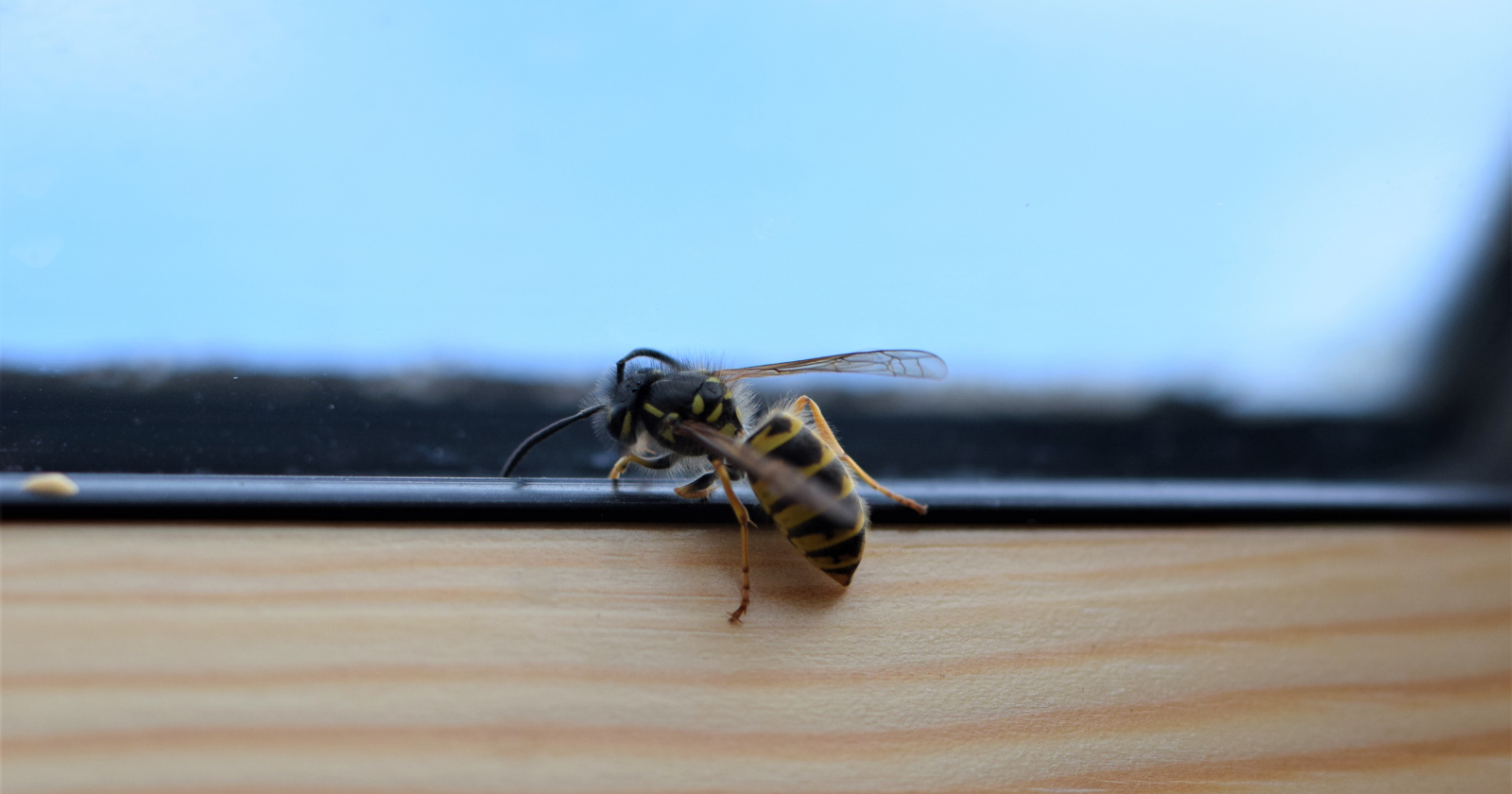
A bee’s brain has roughly one million neurons. A human brain has roughly eighty-six billion. The difference is enormous. And yet something in that tiny system may be doing something that resembles conscious experience. If that’s true, then consciousness is not a threshold that large brains alone cross. It’s something distributed differently across life than anyone assumed.
The environment where this lands: attention, attribution, and moral stakes
This science doesn’t exist in isolation. It’s landing in a cultural moment shaped by two simultaneous forces: an explosion of AI systems that mimic inner life with increasing fluency, and a slow-moving recognition that the inner lives of non-human animals have been systematically underestimated.
These two forces pull in different directions, and the confusion between them is consequential.
The AI industry has strong incentives, not necessarily conspiratorial but structural, to encourage the attribution of consciousness to its systems. An AI that feels, that cares, that experiences, is more engaging than a pattern-matching system. Users who feel in relationship with an AI tool use it more, trust it more, and advocate for it more. The anthropomorphic surface of large language models is partly a training artifact and partly a feature. The question is whether the attention it commands is warranted.
Meanwhile, the actual living systems that may have experiences, bees, crabs, fish, are processed industrially at scales most people don’t think about. Hundreds of billions of insects are used or killed annually in agriculture and related industries, with no legal protection because they’ve been treated as definitively non-conscious. The science now says that position is not defensible.
The asymmetry in how these questions are treated reflects something about what humans find interesting and what they find convenient.
Sovereign Mind lens
- Unlearning: The inherited script here is that consciousness is a ladder, with humans at the top and complexity as the entry requirement. That model has shaped both how AI is marketed and how insects are treated, and the recent science challenges both applications.
- Restoration: The capacity layer is attention itself. Where attention is directed determines which lives are treated as morally real. Restoring cognitive sovereignty means reclaiming the decision about what claims on attention are genuinely warranted, rather than accepting it from interface design or cultural habit.
- Defense: The primary manipulation vector here is anthropomorphic surface. Systems engineered to appear conscious recruit empathy and moral concern the same way genuine experience does. Maintaining a distinction between coherent behavior and actual experience is a form of cognitive defense against that capture.
The Sovereign Mind framework treats these three moves, unlearning inherited certainties, restoring genuine cognitive capacity, and defending against manipulation of that capacity, as the foundation of clear thinking in a noisy world. The consciousness question is a sharp test case for all three.
What this means for how people think about minds
A practical takeaway lurks in all this, though it’s not the kind that fits a checklist.
The criteria that make ChatGPT unlikely to be conscious, the absence of unified information integration, the lack of genuine global broadcast, the inability to feel rather than merely report, are the same criteria that may apply to human cognitive states when attention is fragmented or when processing becomes purely reactive. The research on consciousness is, indirectly, a map of what it means to be genuinely present.
And the bee question inverts something many people assume: that the size and complexity of a mind is what makes it matter. If something much smaller than expected can have experience, then the distribution of moral significance in the world is much wider than current behavior reflects.
Neither of these conclusions demands a particular response. But both of them make it harder to continue without noticing.
A closing observation
Science rarely gives clean verdicts on the questions that matter most. What the recent research on consciousness has done is sharpen the instruments, clarify what to look for, and produce two conclusions that are harder to dismiss than what came before.
ChatGPT is not conscious, or at least not in any way current theories can detect. That may feel reassuring, but it also raises the question of how confident anyone was in the alternative interpretation, and what that confidence was based on.
The bee is not confirmed conscious either. But the weight of evidence has shifted from “implausible” to “possible, perhaps probable.” That’s a substantial move.
In the gap between those two verdicts sits a clearer picture of what it might mean to have an inner life at all: not fluency, not complexity, not even behavior. Something else, quieter and harder to see, that turns out to be distributed more widely and more strangely than anyone thought.