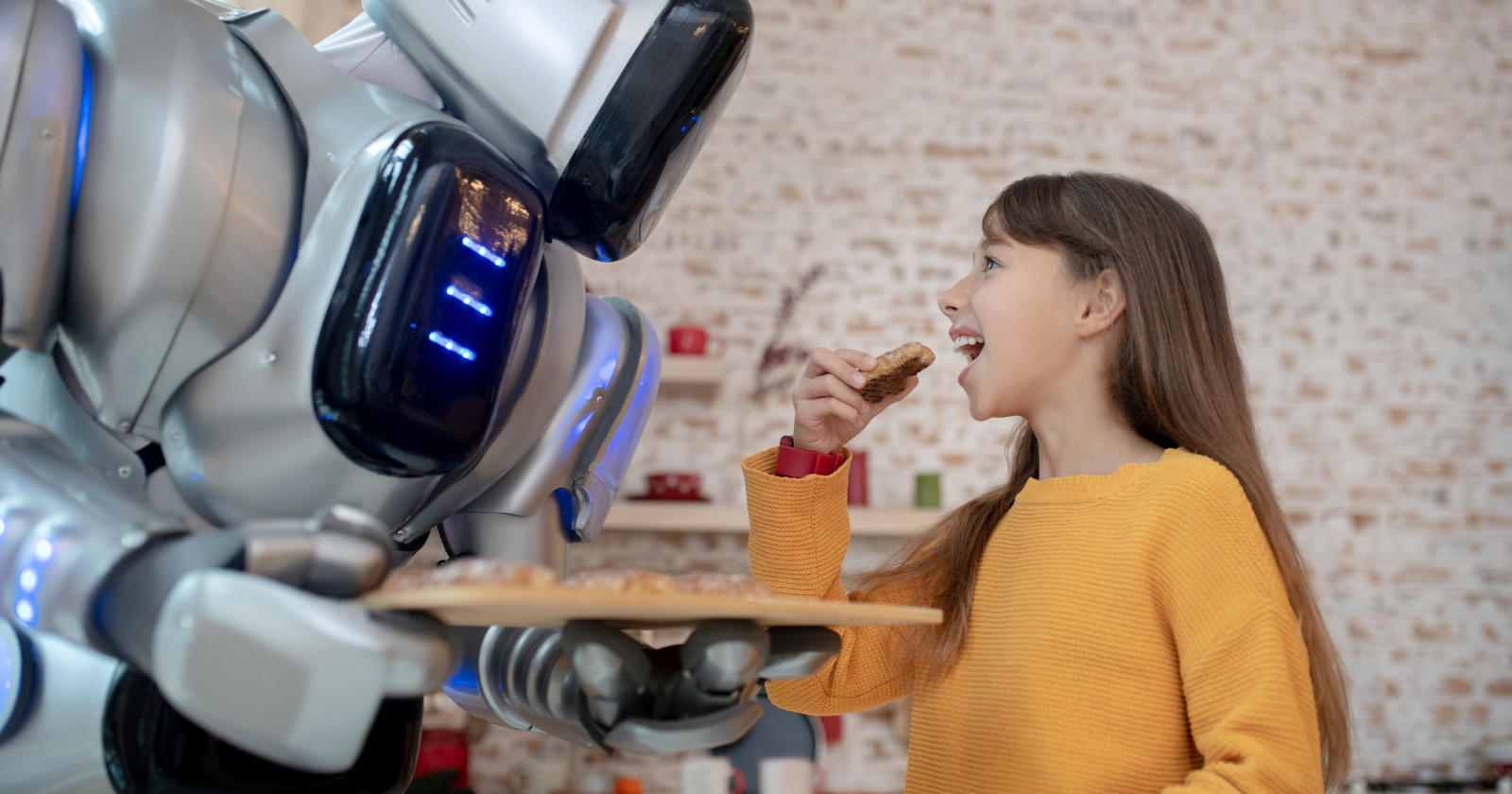
The finding lands with a strange kind of flatness: AI can now outperform the average human on standardized creativity tests. We knew something like this was coming. We’ve been arguing about it for years. And yet, now that the data is actually here, it produces less clarity than expected — because the more carefully you read the study, the more the headline dissolves into a far more interesting question.
The research, published in Scientific Reports in January 2026, is the largest direct comparison ever conducted between human and AI creativity. Led by Professor Karim Jerbi at the Université de Montréal — with Yoshua Bengio, one of the architects of modern deep learning, among its contributors — the study evaluated GPT-4, Claude, Gemini, and other leading models against the creative outputs of more than 100,000 human participants.
The primary tool was the Divergent Association Task — a validated creativity measure that asks people (and now, AI systems) to list ten words that are as semantically distant from each other as possible. The wider the conceptual range, the higher the creativity score. AI systems, particularly GPT-4, scored above average human performance on this task. They also scored above average on haiku composition, short story writing, and plot summaries.
But here is where the study gets genuinely interesting.
The floor gave way. The ceiling didn’t.
When researchers looked not at the average but at the top performers — the most creative humans in the sample — the picture changed entirely. The most creative half of human participants outscored every AI model tested. The gap grew larger still among the top 10%. At the highest levels of human creativity, AI is not competitive.
What separates those people from the average participant? The researchers don’t say this explicitly, but the structure of the task implies it. The Divergent Association Task rewards people who keep going — who, after producing an obvious answer, refuse to settle there. Who push past “galaxy” and “fork” and “storm” into something stranger, something from further away in conceptual space, something they had to work to reach.
AI optimizes for the plausible response. The highest-scoring humans optimize for the surprising one — and they are apparently willing to tolerate a great deal of discomfort to get there.
This is not a small distinction. The average human — like the average AI — stops when the answer feels adequate. The exceptional human keeps going past adequate, past good, past clever, into something that costs more to produce and feels less certain on arrival. That willingness to stay in the discomfort of not-yet-good-enough is, it appears, exactly what AI cannot replicate.
Why this result is not reassuring in the obvious way
The temptation is to read this study as a comfort: the best humans are still ahead. But there are at least two reasons that comfort should be held lightly.
First, the study confirmed that AI creativity is not fixed — it can be adjusted by changing temperature settings and prompt structure. Higher temperature produces more unexpected outputs. Prompts that encourage etymological thinking produce more distant associations. AI’s ceiling is being raised deliberately and continuously. Human creativity develops differently: slowly, through practice, exposure, failure, and a certain kind of stubborn refusal to be satisfied.
Second, the researchers found something alarming about the lower end of the human distribution. It is not that average humans are slightly worse than AI. It is that a meaningful proportion of human participants were substantially worse — producing conventional, predictable, semantically clustered responses that any basic language model could surpass easily. The question worth asking is not “are the best humans still ahead?” but “what are we doing, culturally and educationally, to protect and develop the cognitive habits of the people who might become the best?”
The finding is not that AI has become creative. It is that human creativity is now visibly stratified — between those who have preserved the capacity to keep going past good enough, and those for whom that friction has been quietly, conveniently, optimized away.
Sovereign Mind lens
This is exactly the kind of problem the Sovereign Mind framework was built to address: when a system optimized for efficiency begins to erode the cognitive capacities that can’t be optimized — only practiced.
- Unlearning: The assumption worth examining is that creativity is a trait — something you either have or don’t. The data suggests it is more like a practice, one that most educational and professional environments systematically undo by rewarding the fast, adequate answer over the slow, strange one. What scripts have you absorbed about what “creative enough” looks like.
- Restoration: Divergent thinking — the kind that produces wide conceptual range — requires cognitive conditions that are increasingly rare: unstructured time, low performance pressure, permission to produce bad ideas before good ones. The environment that produces peak human creativity is almost the opposite of the environment most of us inhabit. Rebuilding that space is not a luxury. The study now gives it a data-backed justification.
- Defense: There is a specific kind of intellectual manipulation at play when AI-generated content is optimized to feel creative — to feel surprising, fresh, unexpected — while actually occupying the statistical center of what humans expect. Recognizing the difference between genuine novelty and sophisticated pattern-matching is, increasingly, a cognitive skill worth developing deliberately. The question to ask of any creative output, human or machine: did this come from somewhere, or does it just sound like it did?
The habits that protect against replacement
If you look at what distinguishes the top 10% of human performers on this task, it maps onto a specific set of cognitive behaviors: comfort with ambiguity, tolerance for open-endedness, willingness to generate many ideas before selecting any of them, and — critically — resistance to satisficing. Satisficing is the term Herbert Simon coined for the human tendency to accept the first solution that meets a minimum threshold. It is efficient. It is also the creative death spiral, and it is what AI has perfected.
The humans who score highest on divergent creativity tasks are inefficient. They do not stop at adequate. They produce more options than they need, follow stranger paths, tolerate the friction of not-knowing-yet. These are not natural tendencies — they are cultivated ones, and they require an environment that rewards them rather than punishes them for the delay they introduce.
And as AI can handle adequate answers faster and more fluently than most humans, that willingness to be inefficient — to keep going, to sit in the uncertainty, to reach for the word that’s further away — may be the creative territory most durably human.