In my twenties, I was obsessed with optimization. I mean truly obsessed. I had read every productivity book I could get my hands on. I time-blocked my calendar in 30-minute chunks. A times, I was tracking how I spent every hour. I tried waking up at 5 a.m. because that’s what “successful people” did.
At the time, I was trying to get a business off the ground, and hustle culture had me completely bought in. The message was everywhere: grind harder, sleep less, fill every gap in your day with something productive. If you weren’t busy, you weren’t serious.
So I optimized. And optimized. And optimized some more.
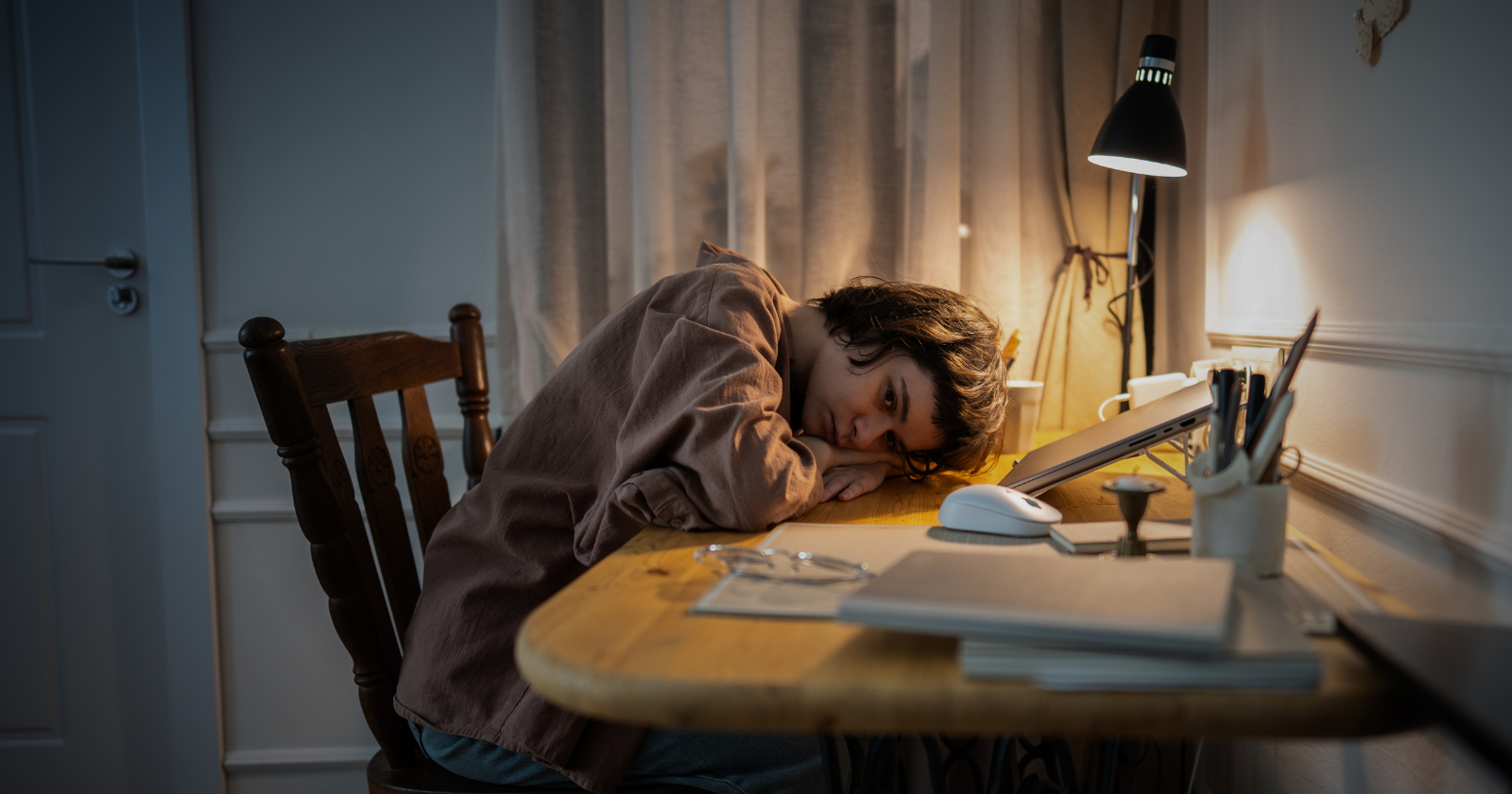
And you know what happened? I burned out. Not just physically, but creatively. The ideas dried up. The more I squeezed my schedule, the less original my thinking became. I tried switching productivity systems, thinking the problem was the method. I tried Pomodoro timers, bullet journals, digital planners. None of it helped. What I didn’t realize at the time was that the problem wasn’t how I was organizing my hours. The problem was that I had no unorganized hours left.
It took me years, a career change, and a lot of reflection to understand what I had been doing to myself. Now, as a writer, I see the damage that kind of relentless scheduling does to creative work.
And as it turns out the research has been saying this for a long time.
Teresa Amabile, a professor at Harvard Business School, ran one of the most ambitious studies on workplace creativity ever conducted. She analyzed over 12,000 daily diary entries from workers across seven companies. What she found should make anyone who glorifies the packed schedule think twice: on high-pressure days, people were 45% less likely to think creatively than on lower-pressure days.
Not slightly less creative. Nearly half as creative.
As she put it in the Harvard Business Review, under high time pressure, “people tended not to be creative… They were very fragmented in their days. They were dealing with a lot of things coming at them that they didn’t expect. They were running. They actually felt like they were doing a lot, and they often were, but they weren’t getting anywhere.”
“Running” hit me hard when I first read it. That’s exactly what I was doing in my twenties. Running from one task to the next, one meeting to another, one goal to the next, always moving, never stopping long enough to actually think.
But here’s the thing about the brain: it needs that stopping time. As I wrote about in my last post, our brains have a Default Mode Network, or DMN, that activates when we’re at rest or engaged in unstructured thought. This is the network responsible for introspection, imagination, and connecting seemingly unrelated ideas. It’s where creative breakthroughs happen. But by scheduling every moment for maximum efficiency, we prevent our brains from ever entering this mode.
You literally cannot schedule an epiphany. It doesn’t work that way.
What really changed my perspective, though, was learning about how history’s most creative people actually spent their days. By today’s hustle culture standards, they were total slackers.
Charles Darwin did three 90-minute sessions a day. He published 19 books in his lifetime. Charles Dickens worked from 9 until 2; five hours, then done. He produced more than a dozen novels. Stephen King writes for about 4 hours a day. Haruki Murakami gets up at 4 a.m., writes for five or six hours, then runs, reads, and listens to music for the rest of the day.
When you look closely at the daily lives of these creative giants, they only spent a few hours a day doing what we would recognize as their most important work. The rest of the time, they were hiking mountains, taking naps, going on walks with friends, or just sitting and thinking.
That’s the opposite of optimization. And yet the output speaks for itself.
G.H. Hardy, one of Britain’s leading mathematicians, told a colleague: “Four hours creative work a day is about the limit for a mathematician.” Four hours. Not twelve. Not sixteen. Four.
This flies in the face of everything hustle culture tells us.
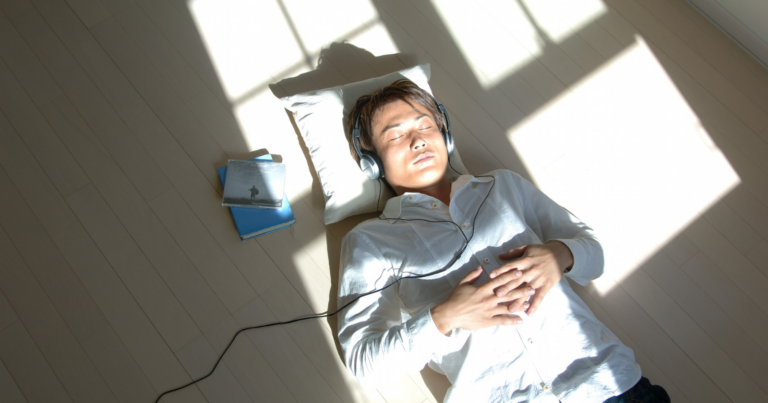
And I’ve experienced this countless times as a writer. The best ideas for an article rarely come while I’m staring at the screen trying to force them out. They come when I’m on a walk, in the shower, or lying on the couch doing absolutely nothing. They come when I stop trying.
The philosopher Bertrand Russell saw all of this coming almost a century ago. In his 1932 essay “In Praise of Idleness,” he wrote that “a great deal of harm is being done in the modern world by belief in the virtuousness of work.” He argued that our obsession with constant activity was not just exhausting but actively harmful to human flourishing.
That was 1932. It could be argued it’s only gotten worse.
Research by Silvia Bellezza and colleagues argues that busyness and lack of leisure time have actually become a status symbol. It’s a complete reversal from a century ago, when the wealthy showed off by having nothing to do. Now we show off by having no free time.
We’re not just busy. We’re bragging about being busy.
I was definitely guilty of this. In my twenties, if someone asked how I was doing, my default answer was always some version of “So busy.” I said it with a hint of pride, like it proved I was going somewhere. Looking back, I wasn’t going anywhere meaningful. I was just “running”.
These days, my life looks very different. I write from my home office. I work in the mornings, and by afternoon, I’m usually done with the heavy creative lifting. The rest of the day might involve some admin work, a walk, some reading, or just sitting with my thoughts. By hustle culture standards, I’m probably wasting half my day.
But dare I say, my writing is better than it’s ever been. The ideas are clearer. The connections are more surprising. And I actually enjoy the process, which is something I could never have said when I was optimizing every hour of my life.
The bottom line is this: there’s a real cost to filling every gap in your day. When we optimize every hour, we leave no room for the wandering, the daydreaming, the seemingly unproductive moments that are actually where our most original thinking happens. The most creative thing you can do might just be to leave some space in your calendar with nothing in it at all.
Until next time.