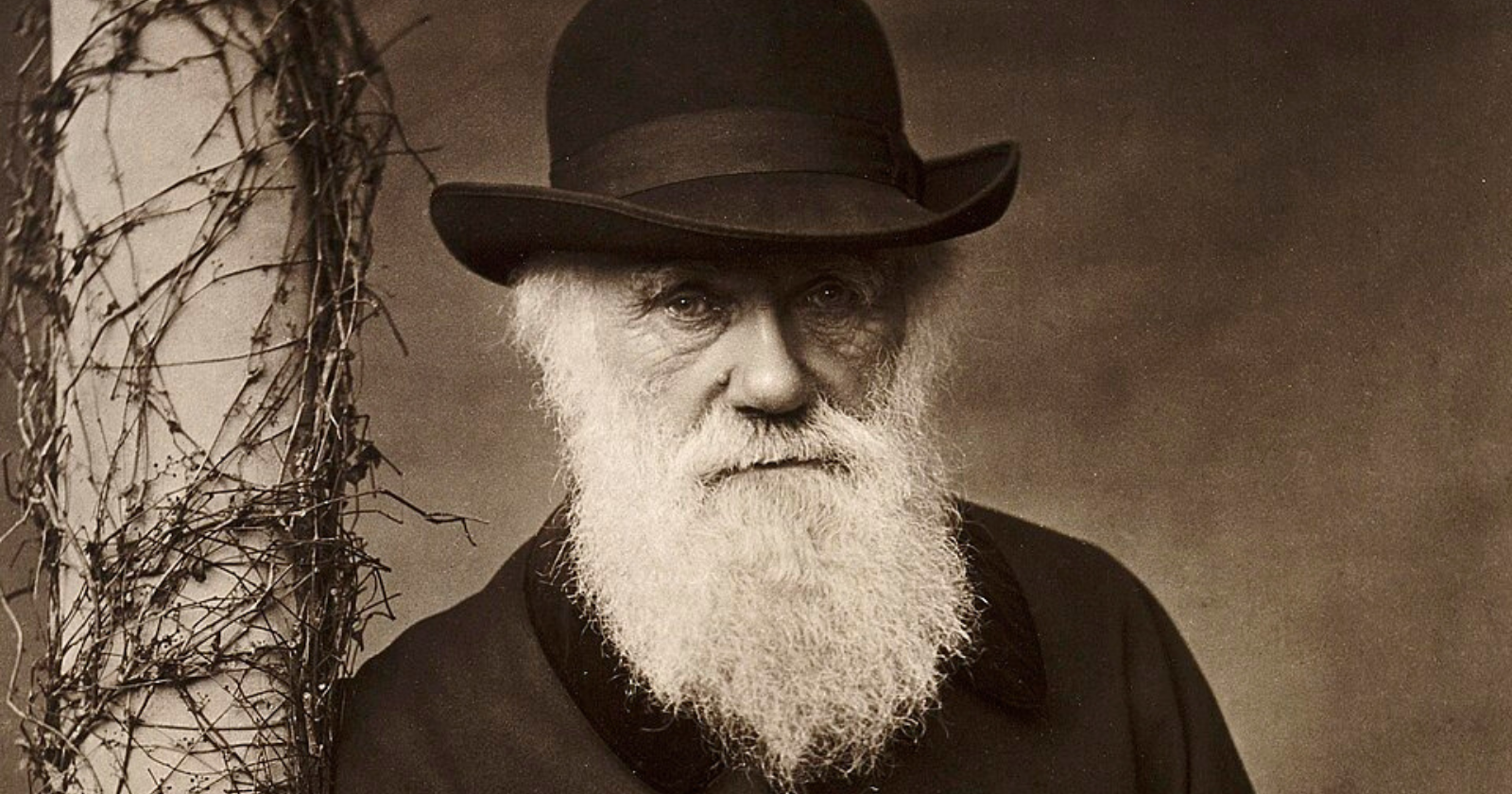
Charles Darwin spent decades building one of the most consequential ideas in human history. He catalogued thousands of species, sailed the world, and worked with the kind of focused, relentless output that most people can barely imagine.
By the end of his life, he had changed how the human race understands itself. He also had a regret.
In the autobiographical sketches he wrote for his children near the end of his life — collected after his death as The Autobiography of Charles Darwin — he wrote:
“If I had to live my life again, I would have made a rule to read some poetry and listen to some music at least once every week; for perhaps the parts of my brain now atrophied would thus have been kept active through use. The loss of these tastes is a loss of happiness.”
The passage that contains the quote makes it even more striking. Darwin describes what had happened to him across years of scientific work: “My mind seems to have become a kind of machine for grinding general laws out of large collections of facts.” He seems to be describing an actual loss — a slow atrophy of his ability to feel moved by a poem or a piece of music. As a younger man he had loved these things, sitting for hours reading Shakespeare’s historical plays, and finding real pleasure in Wordsworth and Shelley.
There is something genuinely funny about this, in the way that only sad things are funny. One of the most productive minds of the last two centuries looked back at his life and wished he had done more of the things that arguably don’t produce anything.
As society we are obsessed with optimization. We have entire industries built around the idea of becoming a better version of yourself. Every January, it repeats at scale. A survey by the Health and Fitness Association found that around 60 percent of Americans who planned to set goals for 2025 intended to focus on health and exercise. These lists rarely includes “read more poetry.” We want to be leaner, richer, sharper, more disciplined. Better. There is nothing inherently wrong with any of those things. But there is something worth noticing about a life so focused on optimization that it has no room left for the things that don’t measure.
I’m not immune. I’ve chased enough benchmarks to know what the arrival actually feels like — which is mostly just the quiet appearance of the next thing you’re supposed to want. But the hours I keep coming back to, when I think about what has actually felt like living, are almost never the productive ones. Golf alone on an evening after work, the course mostly empty and no particular score to chase. Motorbike rides through Vietnam, the road and the noise and nothing to decide. A long walk with nowhere to be. The kind of afternoon that doesn’t produce anything and doesn’t ask you to.
Darwin’s regret it seems wasn’t that he hadn’t worked hard enough. He had worked extraordinarily hard — one of the most productive scientists in history. His regret was that he had let the working crowd out the other thing — the part that, it turned out, was what made the working feel worth it. Not output. Joy. The word he uses is happiness, and he uses it plainly, without apology. As if he is stating something obvious that he wished someone had reminded him of earlier.
We are not going to stop setting goals. But it might be worth looking at what keeps not making the list — the song played for no reason, the hour with no agenda, the thing that doesn’t output anything.