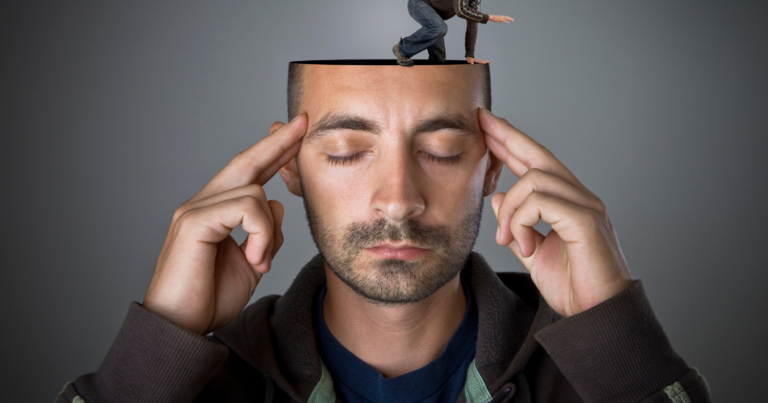
Most people who are struggling don’t look like they’re struggling.
They show up on time. They answer emails. They smile when spoken to. And when someone asks how they’re doing, they say the word that keeps everything moving: fine.
It’s such a small word. And it does such heavy lifting.
What most people don’t realize is that pretending to be fine isn’t just a social habit. It’s a regulation strategy with real cognitive, emotional, and physiological costs. The performance of okayness doesn’t just mask how you feel. Over time, it changes how you feel, how you think, and how you connect with other people.
I’ve spent years studying emotion regulation, both in academic research and in my own life. Part of my doctoral work involves how people manage their emotional responses, including the specific mechanisms that make some strategies adaptive and others quietly destructive. What keeps drawing me back to this topic is how invisible the damage can be. The person pretending to be fine often looks, from the outside, like the most composed person in the room.
That composure has a price.
What pretending to be fine actually is
In psychology, what most people call “pretending to be fine” maps closely onto a strategy known as expressive suppression. It’s the deliberate inhibition of outward emotional expression, hiding what you feel while the feeling itself continues underneath.
This is different from choosing not to react impulsively. It’s different from taking a breath before speaking. Expressive suppression means the emotion is fully present internally, but you are spending energy to make sure no one can see it.
The distinction matters because suppression doesn’t reduce the emotion. It only reduces the visibility of the emotion. The feeling stays. Sometimes it intensifies. And the effort required to hold it down pulls resources away from everything else you’re trying to do.
James Gross and Oliver John, whose foundational research on emotion regulation strategies has shaped much of what we know in this field, found that people who habitually suppress their emotions experience less positive emotion overall, more negative emotion, and worse interpersonal functioning. Not because they’re emotionally broken, but because the strategy itself carries those costs.
The cognitive tax you don’t notice
One of the less obvious consequences of pretending to be fine is what it does to your thinking. Suppression is not a passive process. It requires active, ongoing self-monitoring. You have to track your facial expressions, your tone, your body language, all while simultaneously processing whatever is actually happening around you.
Research by Richards and Gross at Stanford showed that expressive suppression during emotionally charged situations led to measurably worse memory for the details of those situations. People who were suppressing their emotions while watching a film remembered less about what happened in it. Not because they weren’t paying attention, but because their cognitive resources were being spent on the act of suppression itself.
This has implications far beyond a lab setting. If you’re spending a family dinner pretending you’re not upset, you’re likely absorbing less of the conversation. If you’re holding it together during a meeting after a difficult morning, your capacity for problem-solving and creative thinking is diminished. The mask isn’t free. It’s borrowing against your ability to function.
I find this particularly striking because it challenges the common assumption that keeping your emotions in check makes you sharper. In some cases, it does the opposite.
Why it feels like the right thing to do
Nobody starts suppressing their emotions because they think it will make them miserable. Most people learn it because, at some point, it worked. Or at least it seemed to.
Maybe you grew up in an environment where emotional expression was met with dismissal or punishment. Maybe you learned early that being visibly upset made things worse, not better. Maybe the culture around you, whether family, workplace, or national, rewarded composure and penalized vulnerability.
These aren’t irrational conclusions. They’re adaptive responses to specific conditions. The problem is that a strategy developed for survival in one context often gets carried into every context, long after the original conditions have changed.
This is something I think about a lot, both in my research and personally. I’ve had periods in my life where emotional numbness felt like stability. Where not feeling much seemed preferable to feeling too much. It took time to recognize that the numbness wasn’t peace. It was a cost.
Where the common narrative falls short
The popular version of this conversation tends to land in one of two places. Either “bottling up your feelings is bad, you should express them” or “it’s okay to not be okay.” Both contain a grain of truth, but neither captures the mechanism.
The issue isn’t simply that unexpressed emotions are harmful. In some contexts, choosing not to express an emotion is perfectly reasonable. You probably don’t want to cry during a job interview. You might choose not to express anger in a situation where it would escalate conflict. Temporary regulation is normal and often necessary.
What becomes costly is chronic suppression, the habitual, default use of hiding how you feel as your primary strategy for managing emotional life. When suppression stops being a deliberate choice made in a specific context and becomes an automatic pattern applied to most situations, the costs start accumulating.
The “it’s okay to not be okay” framing, while well-intentioned, can also flatten something important. It implies that the problem is simply one of permission, that if you just gave yourself permission to feel bad, the issue would resolve. But for many people, the difficulty isn’t about permission. It’s that they’ve lost access to what they’re actually feeling. The suppression has become so automatic that the emotion is no longer available to conscious awareness.
That’s a different kind of problem, and it requires a different kind of response.
What suppression does to your body
Emotions aren’t just mental events. They’re physiological processes. When you feel fear, your heart rate changes. When you feel sadness, your breathing shifts. When you feel anger, your muscles tense. These aren’t metaphors. They’re measurable biological responses.
When you suppress the expression of an emotion, the physiological activation doesn’t stop. Your heart rate doesn’t come down just because you’ve arranged your face into a smile. The arousal continues, sometimes for longer than it would have if the emotion had been expressed.
A meta-analysis examining suppression and physiological stress responses found that experimentally manipulated suppression was associated with greater overall physiological reactivity compared to control conditions, driven primarily by cardiovascular and hemodynamic measures. In plain language: pretending to be fine while your body is registering distress creates a gap between what your body is doing and what your face is showing. That gap isn’t neutral. It’s a source of additional strain.
Over time, this chronic mismatch between inner state and outer presentation may contribute to stress-related symptoms. Tension headaches. Digestive issues. Sleep disruption. The body keeps doing what the face is pretending not to notice.
The relational cost no one talks about
Perhaps the most counterintuitive cost of pretending to be fine is what it does to your relationships. Most people suppress their emotions to protect connection. They don’t want to burden others. They don’t want to seem weak. They want to keep things smooth.
But suppression tends to achieve the opposite of what it intends.
When you suppress your emotional expression, the person you’re interacting with picks up on it, often without knowing what they’re picking up on. Something feels off. The conversation feels slightly strained. Trust doesn’t quite build the way it should. Research has found that when one person in a conversation is suppressing their emotions, the other person’s blood pressure actually increases. You’re not just managing your own stress. You’re transmitting it.
Gross and John’s work found that habitual suppressors reported lower social support, fewer close relationships, and lower satisfaction in the relationships they did have. Not because they didn’t want closeness, but because the strategy they were using to maintain it was quietly undermining it.
This is one of the painful paradoxes of emotional suppression. The very thing you do to protect the relationship becomes the thing that erodes it. The other person feels the distance but can’t name it. You feel the effort but can’t explain it. Both of you sense that something is missing, and neither of you can point to what.
The difference between regulation and suppression
It’s worth being precise here, because emotion regulation is not the same thing as emotion suppression. Regulation is a broader category. It includes a range of strategies, some of which are genuinely adaptive.
Cognitive reappraisal, for instance, involves changing how you think about a situation before the emotional response fully takes hold. Instead of trying to hide what you feel after the emotion has arrived, you reframe the situation in a way that changes what you feel in the first place.
The research is fairly consistent on this: reappraisal tends to reduce negative emotion without the cognitive, social, or physiological costs associated with suppression. People who habitually use reappraisal report more positive emotion, better relationships, and higher well-being. People who habitually suppress report less positive emotion, more negative emotion, and greater feelings of inauthenticity.
The key difference isn’t about whether you manage your emotions. Everyone does. The difference is about when and how. Reappraisal works earlier in the emotional process and changes the emotion itself. Suppression works later and only changes what’s visible. That timing distinction has cascading effects on everything from memory to relationships to physical health.
How the external world reinforces the pattern
One of the things I’ve come to take seriously, both as a researcher and a person living in the world, is how much environment shapes emotional behavior. Suppression doesn’t happen in a vacuum. It’s reinforced by the contexts you move through.
Workplaces that reward constant composure. Social media environments where people curate their emotional presentation. Cultures where stoicism is seen as strength and vulnerability as weakness. Families where emotional expression was implicitly or explicitly discouraged.
These environments don’t just make suppression more likely. They make it feel rational. When the world around you consistently signals that visible emotion is a liability, suppressing it looks like good judgment. The problem is that what looks like good judgment in one domain, your career, your public persona, may be slowly degrading your capacity in others: your health, your close relationships, your ability to actually know what you feel.
I notice this in smaller ways too. The mornings when I reach for my phone before I’ve checked in with how I actually am. The conversations where I default to “I’m good” before I’ve even considered the question. These are tiny acts of suppression, and individually they’re harmless. But as a pattern, they add up to a kind of emotional distance from yourself.
Sovereign Mind lens
This is one of those topics where Ideapod’s Sovereign Mind framework maps directly onto the problem. The three layers each address a different part of how pretending to be fine becomes entrenched and how you start to move past it.
Unlearning: The belief that emotional composure equals emotional health is one of the most deeply inherited scripts most of us carry. It often comes from family, school, or cultural norms that equated visible emotion with weakness or immaturity.
Restoration: Rebuilding your capacity to actually feel what you feel, without immediately managing it for someone else’s comfort, is a form of nervous system and cognitive restoration. It means relearning how to sit with discomfort rather than reflexively masking it.
Defense: Protecting yourself from environments and relationships that punish emotional honesty is not withdrawal. It’s boundary-setting. This includes recognizing when a workplace, a friendship, or even a social media feed is reinforcing the pattern of suppression rather than helping you move beyond it.
A more honest kind of composure
None of this is an argument against composure. There’s a meaningful difference between someone who has processed their emotions and chosen how to respond, and someone who is white-knuckling their way through every interaction hoping no one notices.
The first kind of composure is grounded. The second is exhausting.
What I’ve found, both in the research and in my own experience, is that the goal isn’t to express every emotion the moment it arises. That’s not realistic, and it’s not always helpful. The goal is to stop pretending that suppression is costless. To notice when “I’m fine” has become a reflex rather than a report. To pay attention to the gap between what your body is telling you and what your face is showing.
The body often notices what the mind has not caught up with yet. And the people around you notice more than you think, not what you’re feeling exactly, but that something is being held back.
Maybe the question worth sitting with isn’t “how do I get better at pretending to be fine?” but “what would it take to actually be fine, or to be honest that I’m not?”
That kind of honesty doesn’t require dramatic disclosure. Sometimes it just means pausing before you say “I’m fine” and asking yourself whether that’s true. Sometimes it means telling one person, the right person, what’s actually going on. Sometimes it means simply acknowledging to yourself, quietly, that you’re not okay, and that this is information worth having.
That acknowledgment, small as it sounds, is where something starts to shift.